
Project Overview
The Project
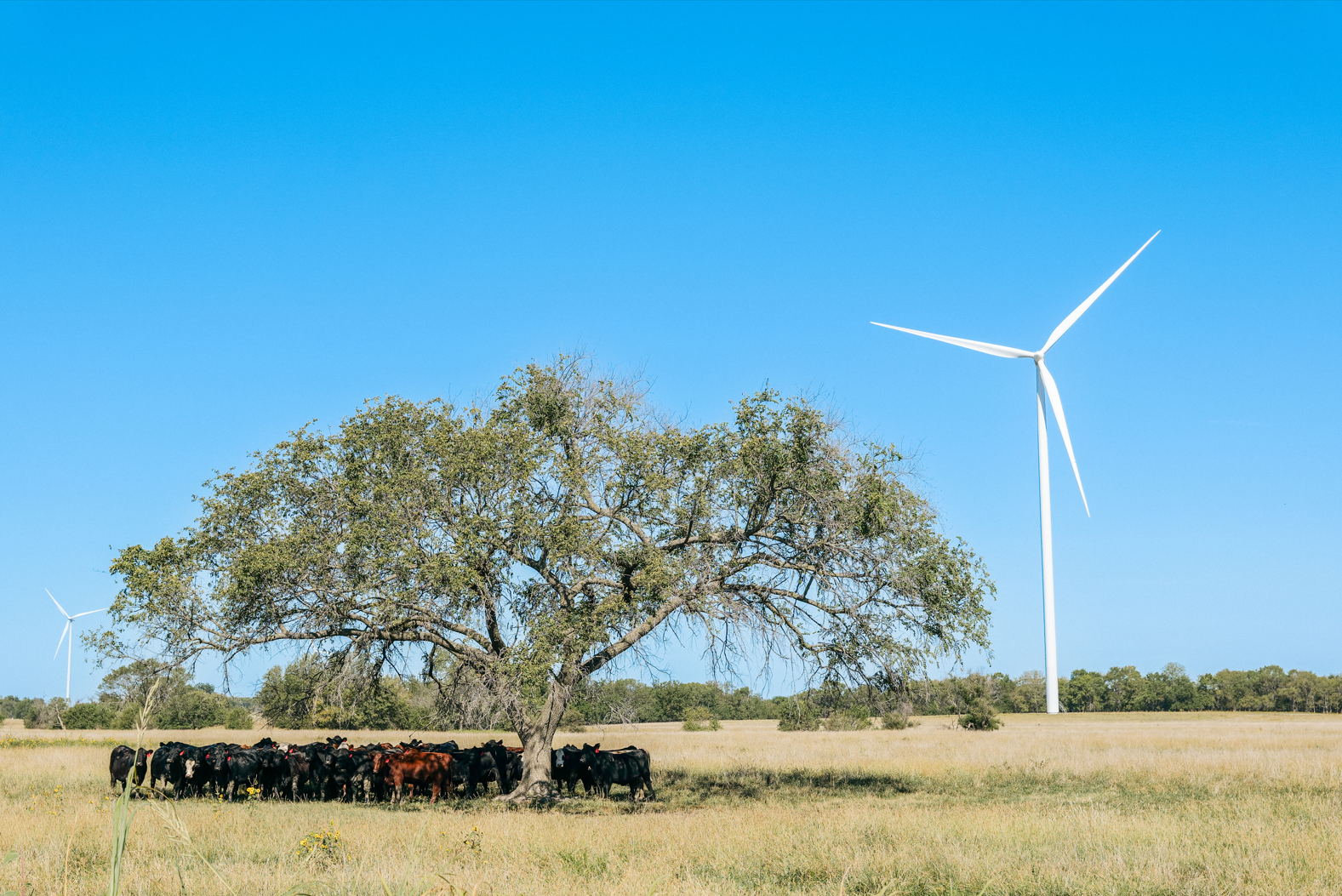
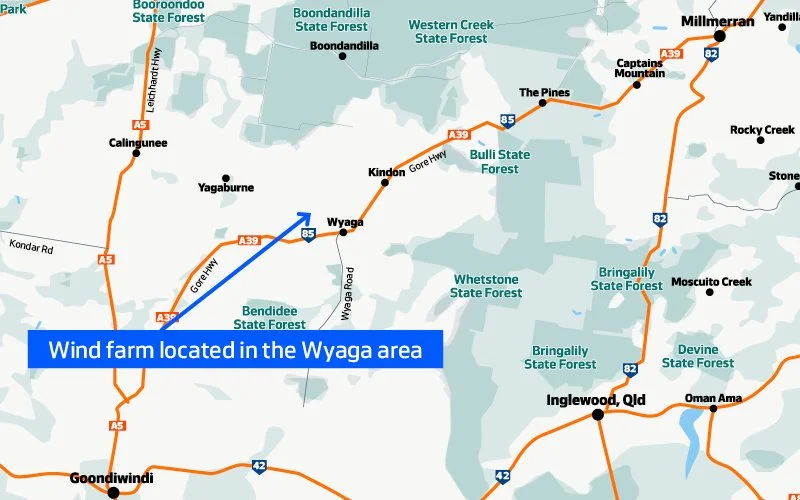
Vestas proposes to construct and operate a new wind farm of up to 110 wind turbines in the Wyaga area of the Darling Downs region of Queensland, approximately 300km west of Brisbane. The wind farm will have a combined capacity of up to 700 megawatts (MW). The site of Harvest Wind Farm, (The Project) was chosen for its strong, consistent winds and flat landscape, which provide ideal conditions for wind energy generation.
The Project site covers approximately 40,000 hectares; however, only a very small proportion of this will be disturbed by turbines and associated infrastructure. The Project may include a battery storage system (BESS). This will enable the Project to capture excess electricity and to supply electricity at peak times. The Project will also involve constructing the shortest possible transmission line easement to connect the wind farm to the existing transmission 330kV line running between Bulli Creek and Goondiwindi.
About Vestas
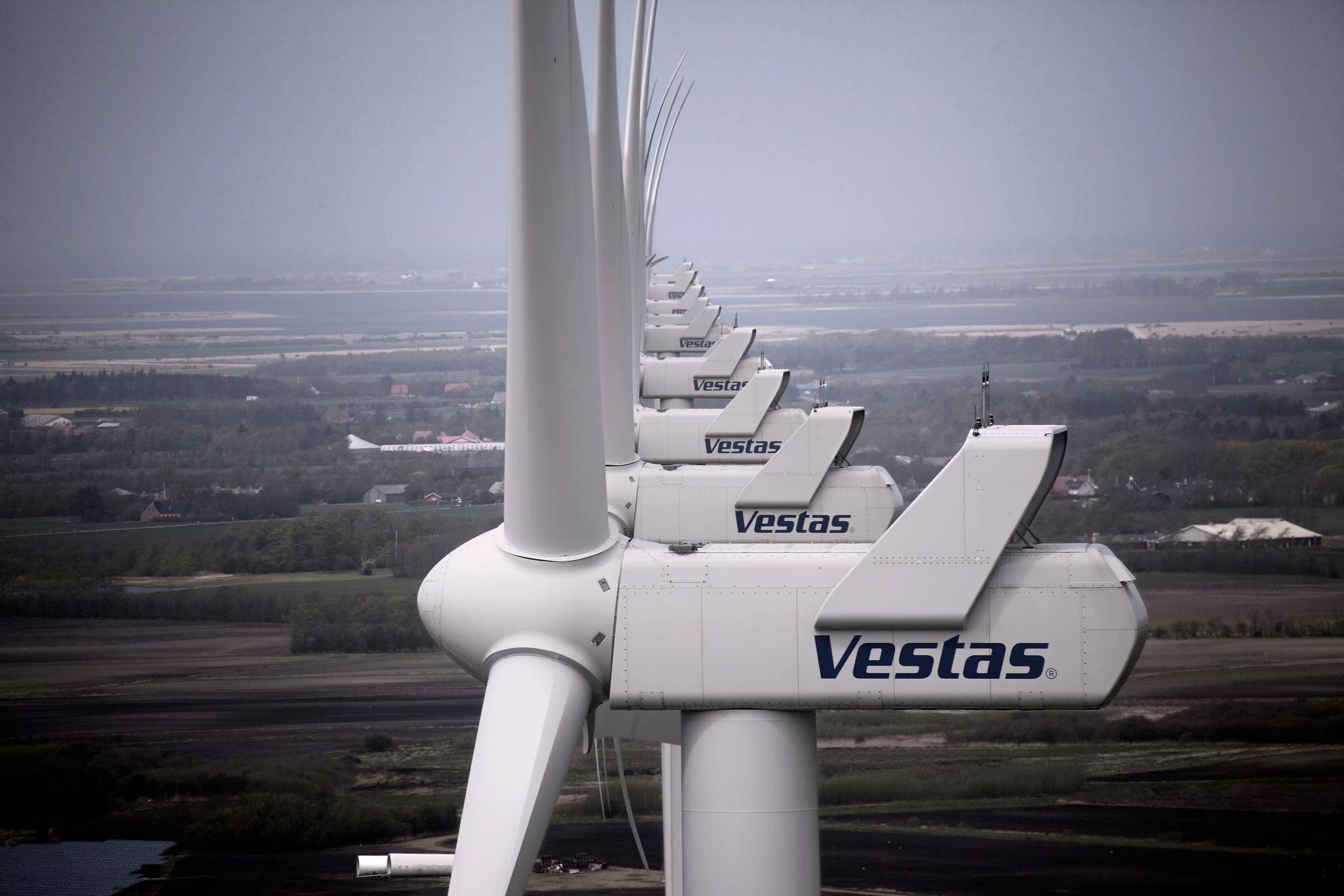
We design, manufacture, install and service onshore and offshore wind turbines across the globe. With more than 190 gigawatts (GW) of wind turbines in 88 countries, we have installed more wind power than anyone else.
Active in Australia for more than 30 years, Vestas has constructed and is operating more than 2,200 turbines across over 60 wind farms – about 6GW and 40% of Australia’s installed wind capacity.
Employing more than 750 employees across Australia and New Zealand, Vestas is funding the development and design of Harvest Wind. We are committed to supplying the wind turbines, managing project construction and providing long-term operation and maintenance services for the plant.
Project Status
The Harvest Wind Farm project is in the early stages of project development.
The team will be actively consulting with local community members and stakeholders about the project. The feedback received, in conjunction with the results of environmental assessments, will inform the final project design.
Project Timeline
-
Site identification
Preliminary site investigations. -
Wind measurement campaign
Monitoring the available wind resource. -
Community engagement
Providing information to the community and key stakeholders and listening to feedback. -
Environmental studies
Including ecological, cultural heritage, visual, impacts. These will inform the design and layout of the wind farm. -
Layout and design
Site design and technical studies. -
Federal and state approvals
Submitting the EPBC and lodging the DA. -
Grid connection
Offer to connect. -
Construction
Up to 30 months.